In the dynamic landscape of mobile gaming, gamers in Germany stand out with a remarkable 74% of consumers engaging in this digital pastime. This trend is particularly pronounced among individuals aged 25 to 29, signifying a vibrant young adult demographic that drives the market. With around 40% of gamers playing multiple times a day, it’s clear that mobile gaming has woven itself into the fabric of daily life. DCMN asked 2001 consumers in Germany about their mobile gaming habits in July 2024 in our monthly Brand Tracker. Here are the results.
Mobile Gaming Frequency: A Part of Daily Life
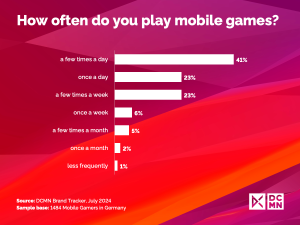
Approximately 40% of mobile gamers in Germany indulge in gaming multiple times a day. Several key factors are influencing this high frequency of play. Many players turn to their mobile devices during waiting periods, making the most of otherwise idle moments. Leisure time during weekends also sees a surge in mobile gaming activity. Or when the weather turns grim, it provides the perfect excuse to stay indoors and engage in mobile gaming. Notably, women have a particular penchant for playing mobile games before bed time, integrating gaming into their nightly routines.

Multitasking Entertainment: Mobile Gaming While Watching TV
While multitasking with TV and gaming is common, this second screen trend is not universal. Even though only 10% of mobile gamers always engage in gaming while watching TV, a noteable 72% tend to watch TV often or sometimes while gaming. Within the 25-29 age group, 37% often watch TV while gaming, and another 37% sometimes combine the two activities. The trend is similar for those aged 30-35, with 42% sometimes watching TV while gaming and 35% often following this multitasking trend. This practice is less prevalent among the 46-55 age group, where 26% rarely or never combine gaming with TV. However, a notable 66% of older gamers still switch on the TV often or sometimes while gaming.

This suggests that while the younger demographic is more likely to multitask, a considerable portion of the older generation also engages in this dual activity less frequently.
Discovery Channels: Finding the Next Big Game
The avenues through which gamers discover new mobile games are varied. The Apple App Store and Google Play serve as the most prominent discovery channels, followed closely by in-app ads and recommendations from friends and family. Word-of-mouth remains powerful in this sphere. Gender and age play a role in discovery preferences, with men tending to be swayed by gaming websites and TV ads, while younger gamers aged 25 to 29 lean towards social media posts, reels, and influencers.

Challenges in Mobile Gaming: Ads, Quality, and Screen Size
Despite its popularity, mobile gaming in Germany faces several challenges. However, the reasons for not engaging in mobile gaming are primarily voiced by non-gamers in Germany. Advertisements are a notable annoyance, with 23% of non-gamers citing the overwhelming presence of ads as a primary deterrent. Interestingly, the frequency of ads is less of a concern for older consumers aged 46 to 55.
Following closely, 22% of non-gamers in Germany perceive mobile games as offering lower engagement and quality compared to other gaming platforms. The small screen size is another drawback, impacting 21% of consumers who find it less immersive. This issue is particularly notable for men. Male gamers also often prefer the superior controls and visual quality of console or PC games.
Additionally, 19% of consumers in Germany, who stated not to play mobile games, struggle to find titles that align with their interests. Also 17% express frustration with in-app purchases and microtransactions. Preferences for console or PC controls and superior graphics, cited by 15% and 11% respectively, further emphasise the desire for a more traditional gaming experience. Battery life concerns affect 10% of non-gamers, while privacy and security worries impact 5%. Moreover, 3% are disappointed by the lack of multiplayer options, and another 3% lack a suitable device for gaming. An additional 9% mention other unspecified issues, and 16% of non-gamers feel that none of these concerns apply to them.
Conclusion: Thriving Amidst Challenges
The gaming scene in Germany is vibrant and multifaceted, with a young adult demographic at its core. While the industry faces challenges such as ads, game quality, and screen size, the passion for mobile gaming continues to thrive. Understanding these trends and preferences is crucial for marketers and developers aiming to capture and retain the attention of this engaged audience. As the mobile gaming market evolves, staying attuned to these insights will be key to success. DCMN developed Performance TV 360° for gaming clients to follow the trends of consumers playing games.

